The Road to the U.S. Senate May Run Straight Through the DFW Suburbs

Aqua RichJo | September 24, 2026
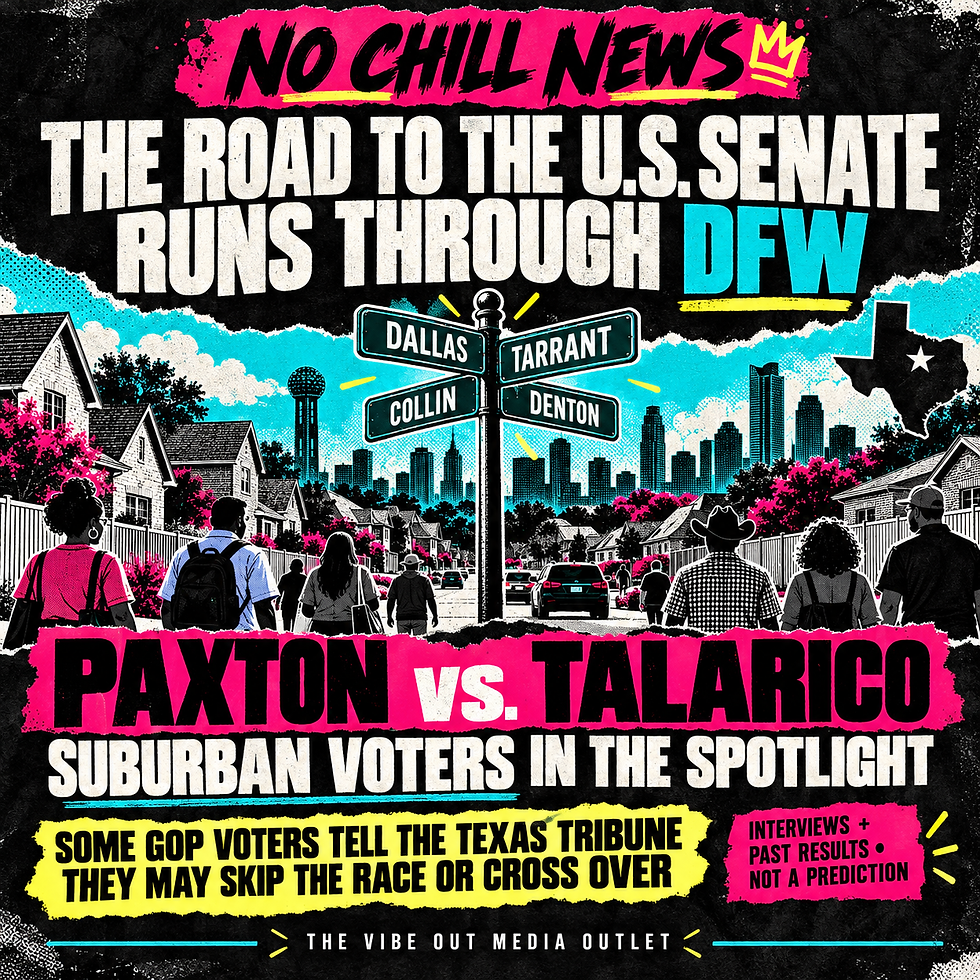
In reporting published Thursday, The Texas Tribune spoke with Republicans across the Dallas–Fort Worth area who said they were considering leaving the Senate contest blank or voting for Democrat James Talarico. Former Southlake Mayor Laura Hill said she plans to skip that race. Other voters told the Tribune they still intend to back Paxton. These interviews reveal hesitation among some voters; they do not predict how the suburbs will vote.
The suburbs matter because of their size. Nearly one in four Texas votes in the 2024 presidential election came from Dallas, Tarrant, Collin and Denton counties, according to the Tribune. The four counties do not vote as one bloc. Democrats narrowly carried Tarrant in the 2024 Senate race. Collin remained Republican leaning but competitive. In Denton, Donald Trump’s margin fell from 20 points in 2016 to 13.1 points in 2024. Past results show why both campaigns are paying attention; they cannot tell us what will happen in November.
What is giving some Republicans pause?
Some voters interviewed by the Tribune cited Paxton’s personal and political record. That history needs precision: the Texas Senate acquitted him in his 2023 impeachment trial. Securities-fraud charges were dropped in 2024 under an agreement requiring community service, ethics training and restitution; Paxton did not admit guilt.
Paxton’s campaign argues that his record as attorney general gives suburban families a reason to support him. A campaign spokesperson pointed to his office’s consumer protection lawsuits and said the campaign plans to bring that message to voters. Republican organizers are also working to persuade hesitant voters to support the party’s full ticket.
That last point matters beyond the Senate race. A voter can make a different choice in each contest on the ballot. Republican organizers interviewed by the Tribune worry that dissatisfaction at the top could affect state legislative, county commission and other local races. Whether it will is still an open question.
The suburbs are more than a voting statistic
“Suburban women” can sound like one kind of voter with one set of concerns. DFW’s suburbs are home to Black women, LGBTQ+ residents, union households, younger voters, longtime Republicans and people voting for the first time. Their priorities may overlap, but their decisions are their own.
The Tribune’s interviews raise a question No Chill News wants to keep asking across those communities: What is actually moving your vote? Is it the cost of living, public education, reproductive policy, LGBTQ+ rights, workers’ concerns, THC restrictions, a candidate’s record—or something political coverage has missed? Tarrant County Democratic Party Chair Allison Campolo pointed to affordability and jobs for working-class and union voters; Republican organizers described their own efforts to keep voters focused on policy and the full ballot.
DFW could have a major say in this race. We cannot call the result from a handful of conversations or a past election map. The work now is to listen to more voters, examine both candidates’ records and report what people say they need from the person who represents Texas in the U.S. Senate.
Based on The Texas Tribune’s September 24 reporting. No Chill News has not independently interviewed the voters quoted in that report.


Comments