Texas Rolled Out the Red Carpet for Data Centers. Now It Wants to Audit Their Power and Water Use.

Aqua RichJo| September 27, 2026
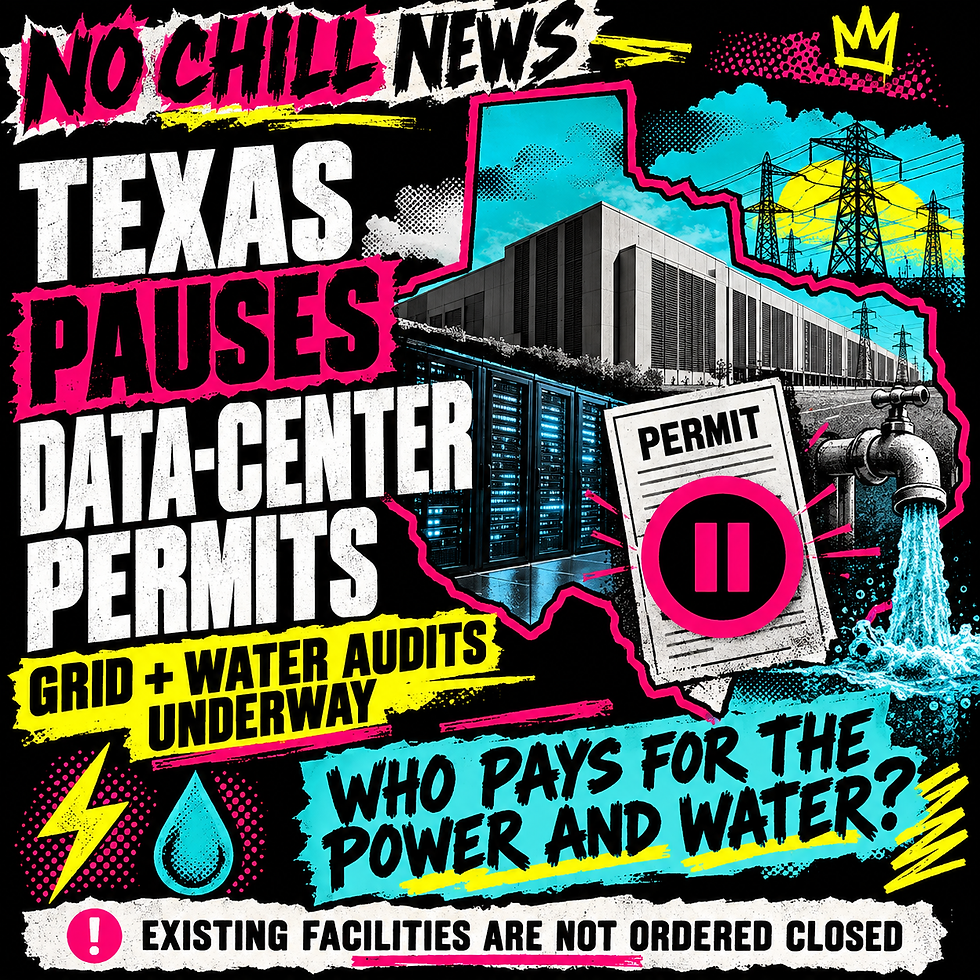
Texas has paused permits sought by data-center projects while state agencies examine what their growth could mean for the electric grid and water supplies. On September 21, Gov. Greg Abbott directed the Texas Commission on Environmental Quality to halt those permits until ERCOT completes an audit. He also said other state regulatory approvals for data-center development should wait for information agencies need to assess grid reliability and water use.
This directive does not order operating data centers to close. It is a pause on permits and approvals, not a finding that every developer broke the law. But it marks a pointed change in the conversation around an industry Texas has worked to attract: Who pays for the infrastructure, and what happens to the resources communities already use?
The grid queue is enormous—but it is not a power bill
ERCOT has tracked roughly 474 gigawatts of large-load projects seeking grid connections, about 90% of them data centers. That queue is more than five times Texas’ record peak electricity demand. It does not mean 474 gigawatts of data centers are built, approved or drawing power today. Projects in an interconnection queue may change or never proceed. The scale of the requests still makes careful planning essential.
Abbott says data-center developers should cover the cost of electrical infrastructure, report their electricity and water use, and protect water needed by nearby communities. The governor has directed ERCOT, the Public Utility Commission of Texas and the Texas Water Development Board to examine the projects’ effects. TCEQ must report back on its compliance with the permit directive by October 19. Abbott also says he will seek to eliminate financial incentives for data centers in the next legislative session.
Those are the state’s stated requirements and plans. Residents still need to see how they will be measured and enforced—and what standards will allow permits to resume.
What does this mean for DFW?
Data centers power cloud services and AI tools, but the buildings occupy real land, require utility connections and can place demands on local water systems. In a major data-center market like DFW, the public should be able to examine each proposed project before its costs are locked in.
Show us the numbers, county by county: How much electricity and water will a facility need? Who pays for transmission and other upgrades? What tax abatements has it received? How many permanent jobs has it promised, compared with temporary construction work? And will nearby households see any change in their bills or water access?
Those questions call for answers from ERCOT, TCEQ, water officials, local utilities and developers—as well as residents near proposed sites, construction workers, consumer advocates and environmental-justice organizations. A project’s benefits and burdens can look very different depending on where someone lives and who pays the bill.
Texas invited the data-center boom. The audit should tell Texans what each project asks of the grid, the tap and the public purse before approvals move forward.
Reporting basis: the governor’s September 21 directive, ERCOT’s large-load figures and Reuters’ report. No Chill News has not independently audited pending projects or interviewed agencies, developers or affected residents.


Comments