Cattle Groups Say ICE Activity Is Disrupting the Beef Supply Chain

Aqua Rich Jo | September 28, 2026
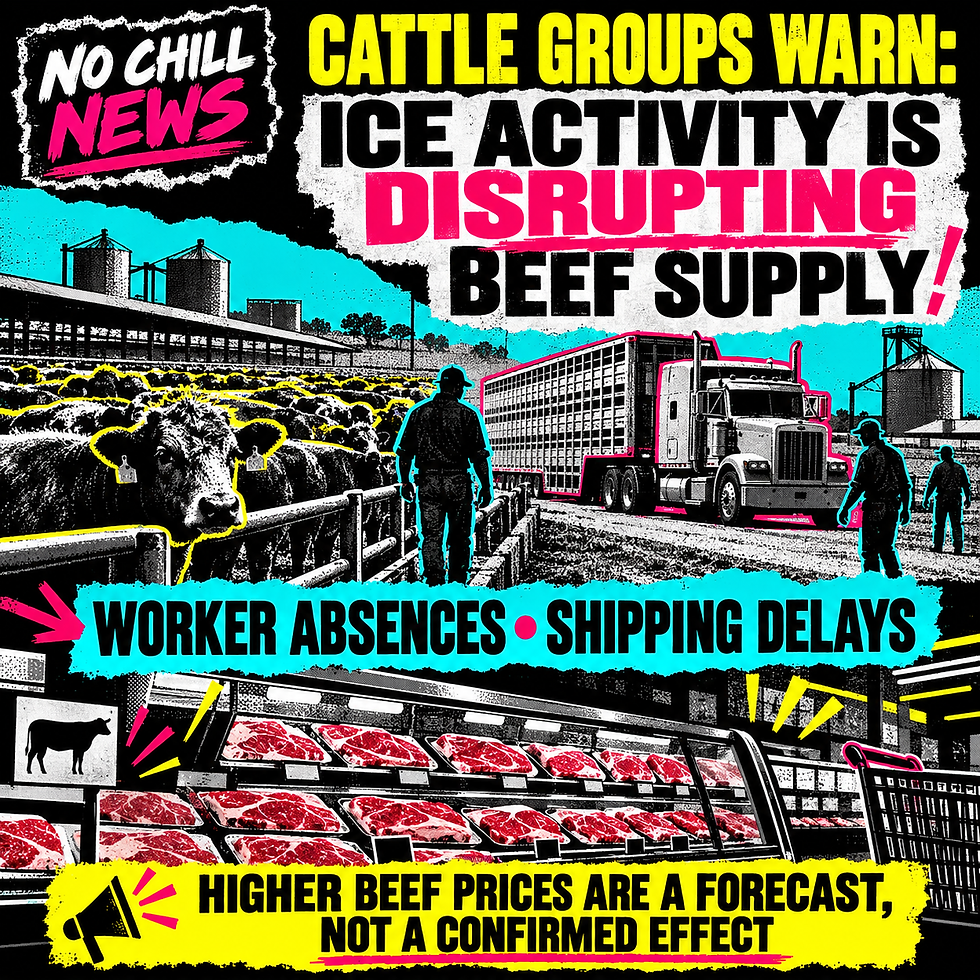
The effects of immigration enforcement can reach beyond the people agents arrest. Three cattle-industry groups say heightened ICE activity is leading workers to miss shifts and delaying cattle shipments across parts of the beef supply chain. They warn that prolonged disruption could push consumer prices higher. That is an industry forecast—not evidence that ICE activity has already caused a specific increase at the grocery store.
The warning came Friday from the Texas Cattle Feeders Association, Kansas Livestock Association and Oklahoma Cattlemen’s Association. The groups described reports of delayed cattle shipments and disruptions affecting feedyards, dairies, processors, transportation hubs, and feed and grain businesses. They said the climate is affecting legal, documented and skilled workers, too.
A missed shift can travel through the supply chain
Cattle need daily care, transportation and timely processing. If workers stay home, a delay at one facility can affect the next. The Associated Press reported that some Kansas processing plants temporarily shut down and sent cattle back to feedyards; a Kansas Livestock Association representative said the group had received calls about increased absences after federal officers appeared in nearby communities.
That does not mean every reported absence followed an arrest or a worksite raid. The association told AP it had not received reports of arrests at the Kansas worksites it discussed. Fear of enforcement in a community can affect attendance even when agents do not enter a particular business. The scale of the disruption across all three states remains unclear: no comprehensive public accounting in these reports establishes the number of affected workers, facilities or shipments.
The Department of Homeland Security said ICE was not conducting worksite operations in Kansas and described its recent actions as targeted enforcement. The response reported by The Texas Tribune did not address the cattle groups’ specific claims about Texas or Oklahoma.
What about the price of beef?
Beef prices were already at record levels, and the U.S. cattle herd was at its smallest size in roughly 75 years, according to the reporting. The associations say another sustained supply-chain disruption could add pressure. They have not shown that a particular retail price increase was caused by ICE operations. Other market forces are already at work.
That distinction matters to workers and shoppers alike. A family worried about an arrest, a producer waiting on a shipment, an animal needing care and a customer watching grocery prices are connected—but each part of the story needs its own evidence.
The receipts we need next
No Chill News wants the associations to identify affected facilities and quantify delayed shipments. We want to hear directly from workers and families who choose to speak, as well as grocery owners, food economists, immigrant-rights attorneys and animal-welfare specialists.
We also want DHS and ICE to provide the dates and locations of relevant Texas operations, arrest totals, the legal basis for those actions and how employers and communities were notified. Which disruptions followed confirmed enforcement actions, and which followed fear of enforcement? That answer is central to understanding what happened.
The cattle groups have raised a serious warning. The next step is to document its reach—from the worker who missed a shift to the shipment that stalled—before assigning a price to it.
Reporting basis: The Texas Tribune’s September 25 report, Associated Press reporting carried by The Washington Post and the San Antonio Express-News. No Chill News has not independently verified individual shipments, interviewed affected workers or documented a retail-price change caused by these operations.


Comments